
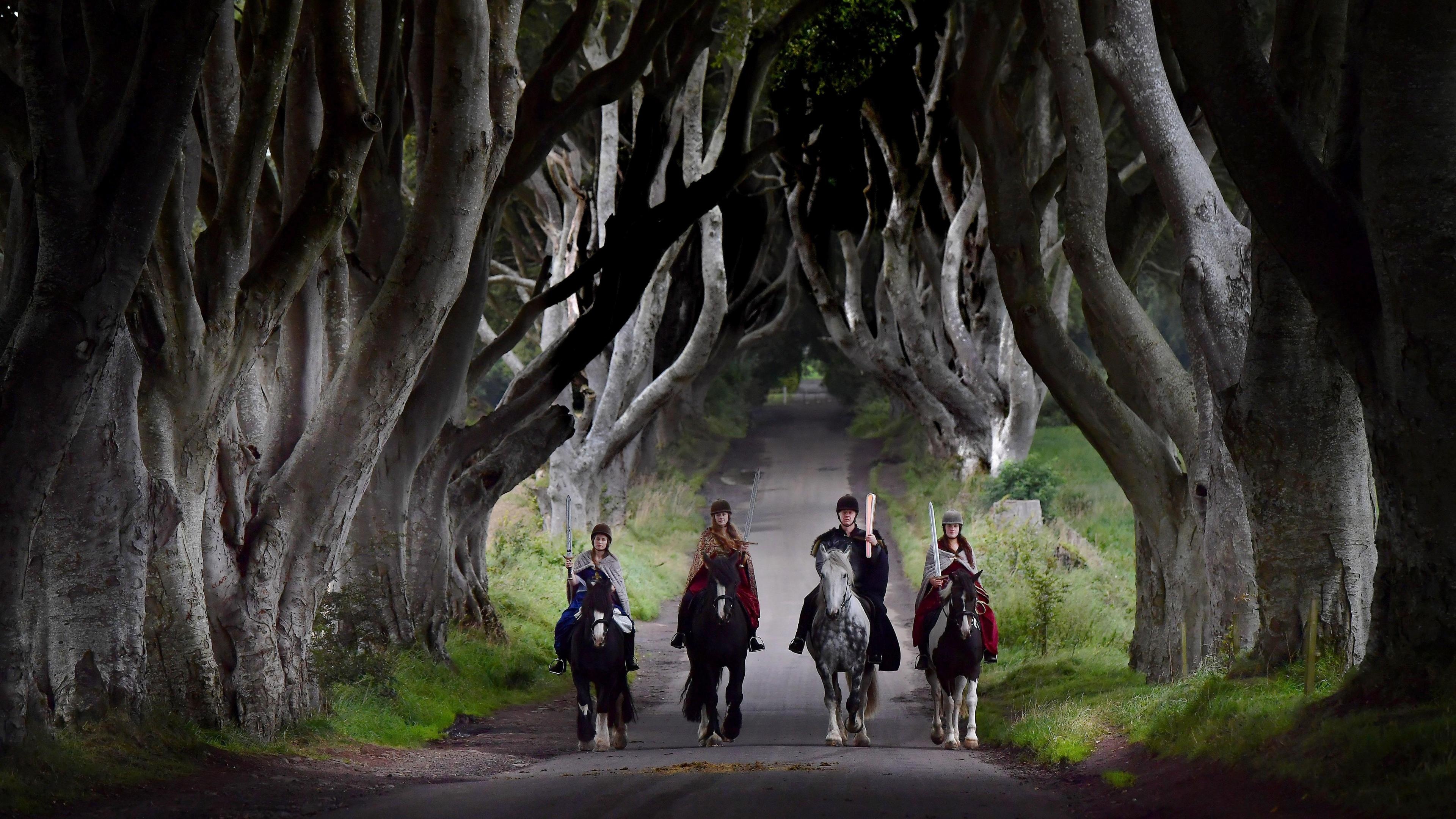
Master Dark Hedges photography with our complete guide covering best times to visit, camera settings, composition tips, and how to avoid the crowds.
Dark Hedges: Northern Ireland's Most Photographed Location
The Dark Hedges has achieved what few tree-lined roads ever do—it's become a global phenomenon. This atmospheric avenue of intertwined beech trees near Ballymoney, County Antrim, attracts photographers, Game of Thrones fans, and nature lovers from across the world, all seeking to capture its otherworldly beauty.
Since appearing in Game of Thrones as the Kingsroad, the Dark Hedges has transformed from a local secret into one of Northern Ireland's most visited attractions. But it remains a magical place that rewards those who visit thoughtfully—particularly photographers seeking that perfect shot.
As someone who has photographed the Dark Hedges in every season and time of day, I've learned what works and what doesn't. This guide shares everything you need to know to capture stunning images while respecting this fragile natural treasure, from optimal camera settings to the best times to avoid crowds.
The History Behind the Trees
Planted in the 18th Century
The Dark Hedges was planted by the Stuart family in the 18th century (around 1775) along the entrance to their Georgian mansion, Gracehill House. The intent was to impress visitors arriving at the estate, and nearly 250 years later, it's fair to say they succeeded spectacularly.
Originally, around 150 beech trees were planted in two rows along the road. Today, approximately 90 remain, having survived centuries of Irish weather, age, and unfortunately, storm damage. Each tree is unique, twisted by time and wind into fantastical shapes that seem almost alive.
The Game of Thrones Effect
While the Dark Hedges was always popular with local photographers, its appearance in Game of Thrones Season 2 (as the Kingsroad where Arya Stark escaped King's Landing) catapulted it to international fame. Visitor numbers exploded from a few thousand annually to hundreds of thousands.
This fame has been a double-edged sword. While it's wonderful that more people appreciate this natural wonder, increased traffic has threatened the trees' health. The road is now closed to through traffic to protect the fragile root systems, making it even better for photographers—though planning your visit carefully is more important than ever.
Conservation Efforts
The Dark Hedges is not officially protected, existing on a public road, which complicates conservation efforts. However, several organizations including the Woodland Trust and the Northern Ireland Environment Agency work to preserve these magnificent trees. Storm damage has claimed several trees in recent years, with major losses during Storm Gertrude in 2016 and Storm Ophelia in 2017.
When you visit, please respect the trees—don't climb them, pull branches for photos, or drive on the closed road. These ancient beeches deserve our care so future generations can enjoy them.
Best Time to Visit for Photography
Optimal Times of Day
Early Morning (5:30-8:00 AM): This is the absolute best time for photography. You'll have the road almost entirely to yourself, morning mist often weaves through the branches creating ethereal atmosphere, and the soft directional light is perfect. In summer, sunrise occurs early (5:30 AM), so set your alarm! Even in winter, arriving by 8 AM usually guarantees a crowd-free experience.
Late Evening (One Hour Before Sunset): The second-best option. The golden hour light filters through the branches beautifully, and most day-trippers have left. Summer evenings (sunset around 9:30 PM) offer extended photography time. The light direction differs from morning, creating different shadow patterns—try both if you can.
Midday (11 AM-4 PM): Avoid this period, especially in summer. Tour buses arrive en masse, the road becomes crowded with tourists taking selfies, and the harsh overhead light creates deep shadows and blown highlights. If you must visit midday, focus on detail shots rather than the classic down-the-road composition.
Overcast Days: Don't dismiss cloudy weather! Overcast conditions provide even, diffused light that eliminates harsh shadows and brings out the rich colors and textures of the bark and leaves. Some of the most atmospheric Dark Hedges photos are taken on moody, overcast days.
Seasonal Variations
Spring (March-May): The trees develop fresh, bright green leaves creating a vibrant canopy. Bluebells sometimes bloom alongside the road in late April/early May. Light: excellent. Crowds: moderate, increasing toward May. Pros: fresh, vibrant colors. Cons: new leaves can reduce the "dark" atmosphere.
Summer (June-August): Full, lush canopy creates deep shade and that characteristic dark tunnel effect the location is named for. This is when the trees look most like the Game of Thrones scenes. Light: dramatic contrasts between shade and sun. Crowds: very heavy, especially midday. Pros: maximum "dark" atmosphere, long evening light. Cons: tourist crowds, need to arrive very early.
Autumn (September-November): Many photographers' favorite season. Leaves turn golden-brown, then fall to create a natural carpet on the road. The changing colors and bare branches reveal different tree structures. September offers better weather than later autumn. Light: excellent, especially on crisp, clear days. Crowds: moderate. Pros: stunning colors, leaf-covered road, dramatic bare branches. Cons: can be wet and muddy.
Winter (December-February): Bare branches create intricate patterns against the sky. Morning frost or fog adds magic, and snow (rare but possible) transforms the scene completely. This is my personal favorite season for dramatic, moody shots. Light: low angle even at midday, creating long shadows. Crowds: minimal. Pros: fewest visitors, dramatic bare branches, occasional frost/fog. Cons: short daylight hours (sunset by 4:30 PM), often wet.
Photography Techniques and Camera Settings
Recommended Gear
Camera: Any camera works, including smartphones, but a DSLR or mirrorless camera gives you more control. The key is understanding how to use your equipment, not necessarily having the most expensive gear.
Lenses:
- Wide-angle (16-24mm): Perfect for the classic down-the-road shot capturing the full canopy.
- Standard zoom (24-70mm): Versatile for various compositions.
- Telephoto (70-200mm): Great for compressing perspective and isolating details or patterns in the branches.
Essential Accessories:
- Tripod: Absolutely essential for low-light shooting, long exposures, and sharp images.
- Neutral Density (ND) Filter: Useful for creating motion blur in clouds or (if visiting on a rare rainy day) creating silky water effects on the wet road.
- Polarizing Filter: Reduces glare, deepens sky blues, and can enhance color saturation in foliage.
- Remote Shutter Release or Cable Release: Prevents camera shake during long exposures.
Recommended Camera Settings
For Sharp, Detailed Landscapes:
- Aperture: f/8 to f/11 (provides good depth of field)
- ISO: 100-400 (keep as low as possible to minimize noise)
- Shutter Speed: Varies based on light; use tripod if below 1/60s
- Focus: About 1/3 into the scene for maximum depth of field
- White Balance: Daylight or shade (depending on conditions), or shoot RAW and adjust later
For Moody, Atmospheric Shots:
- Aperture: f/2.8 to f/5.6 (creates softer backgrounds, emphasizes foreground)
- ISO: Adjust as needed for exposure (can go higher in low light)
- Exposure Compensation: -0.3 to -1 EV (slight underexposure creates moodier feel)
For Creative Long Exposures:
- Aperture: f/11 to f/16
- ISO: 100
- Shutter Speed: 30 seconds to several minutes (requires ND filter in daylight)
- Result: Smooth, creamy clouds moving through branches
Composition Strategies
The Classic Centerline Shot: Stand in the middle of the road, frame the tree tunnel symmetrically with the road leading to the vanishing point. This is the iconic Dark Hedges composition everyone wants, and for good reason—it's stunning. Use a wide-angle lens and low perspective (crouch or use a low tripod) to emphasize the road leading into the distance.
Asymmetrical Compositions: Move off-center for a more dynamic feel. Position yourself on the verge with trees filling one side of the frame heavily, the road curving through the other side. This creates visual tension and is less cliché than the centered shot.
Look Up: Point your camera skyward to capture the intertwining branches against the sky. This works particularly well with bare winter branches or when clouds are moving (use long exposure to blur the clouds).
Detail Shots: Don't just shoot the wide view. Zoom in on bark textures, twisted branch patterns, light filtering through leaves, or reflections in puddles after rain. These details tell the story too and can make compelling portfolio pieces.
Incorporate People (Carefully): A lone figure walking down the road adds scale and narrative. This works best early morning when you can control when people enter the frame. Dress in colors that complement the scene—earth tones work well. Avoid bright jackets or clothing that draws the eye away from the trees.
Silhouettes: On foggy mornings, create silhouettes of the tree trunks against the bright mist. Slightly overexpose to emphasize the fog, turning the trees into dark, mysterious shapes.
Dealing with Challenging Light
The Dark Hedges presents significant dynamic range challenges—bright sky visible through the branches contrasts with deep shadows under the canopy. Here's how to handle it:
Bracketing: Take multiple exposures (typically 3-5 shots) at different exposures and blend them in post-processing. This captures detail in both highlights and shadows.
Expose for Highlights: If shooting a single exposure, expose for the bright sky to prevent blown highlights. You can recover shadow detail in post-processing more easily than recovering blown highlights.
Graduated ND Filter: Use a graduated neutral density filter to darken the brighter sky, balancing the exposure across the scene in-camera.
Embrace the Shadows: Sometimes, deep shadows add to the "dark" atmosphere. Don't feel you must capture detail everywhere—letting some areas go to silhouette can enhance the mood.
Practical Information for Visiting
Location and Access
Address: Bregagh Road, Ballymoney, County Antrim, BT53 8TP (for GPS: coordinates 55.1487°N, 6.3820°W)
Access: The Dark Hedges is free to visit 24/7. It's a public road, though now closed to through traffic. You can walk, cycle, or park nearby and walk in.
Parking: Limited official parking is available at the Hedges Hotel (small car park at the southern end of the road, about 400 meters walk to the best part of the avenue). Do not park on Bregagh Road itself—it blocks access for local residents. Overflow parking can be found in nearby lay-bys along the A26, but be respectful and don't block gates or entrances.
From Belfast: The Dark Hedges is approximately 60 miles (100 km) north of Belfast, about 90 minutes by car. Take the M2 toward Antrim, then the A26 past Ballymoney, following signs to the Dark Hedges or Bregagh Road.
Tour Option: If you're not driving, our Giant's Causeway and Coastal Route tours include a stop at the Dark Hedges, eliminating parking concerns and providing historical context you won't get from visiting independently.
Facilities (or Lack Thereof)
The Dark Hedges is simply a country road lined with trees—there are no visitor facilities, toilets, cafes, or information center at the site itself. The nearest amenities are in Ballymoney (5 km away) or at the Giant's Causeway Visitor Centre (15 km). Plan accordingly, especially for early morning visits.
The Hedges Hotel at the southern end of the trees offers food and toilets if you're a paying customer.
How Long to Spend
For a quick visit and standard photos: 30-45 minutes is sufficient. For serious photography (waiting for light, trying different compositions, experimenting with settings): allow 2-3 hours. Many photographers visit multiple times to catch different conditions, seasons, or times of day.
Avoiding the Crowds: Strategic Planning
The Problem: The Dark Hedges receives an estimated 200,000+ visitors annually, with tour buses arriving throughout the day in peak season. Crowds make photography difficult and diminish the atmospheric experience.
The Solution:
1. Visit Before 8:30 AM: Tour buses don't arrive until 10 AM at the earliest, usually later. Local photographers arrive between 6-8 AM. Even on the busiest summer days, you'll have relative solitude at dawn.
2. Visit After 6 PM (Summer): Most tours have moved on by late afternoon. Summer evenings (7-9 PM) can be beautifully quiet.
3. Winter Weekdays: Visit November-February on weekdays for the quietest experience. You might have the place entirely to yourself.
4. Avoid Peak Dates: July-August are busiest. Bank holidays and school holidays see heavy traffic. If possible, visit in shoulder seasons (April-May or September-October).
5. Check Cruise Ship Schedules: When cruise ships dock in Belfast, tour bus numbers increase significantly. Check cruise schedules at Belfast port and avoid those days if possible.
6. Be Patient: If you arrive and it's crowded, wait. People move through relatively quickly. A 15-minute wait can make the difference between a frustrating experience and a clear shot.
Photography Etiquette and Respect
The Dark Hedges is a living, aging natural feature on a public road where locals live. Please follow these guidelines:
- Don't Touch the Trees: Climbing, pulling branches, or hanging from them damages the trees and compacts the soil around their roots.
- Stay Off Closed Areas: If the road is closed to traffic, respect that. Don't drive on it just to get "the shot."
- Don't Block the Road: Leave access for emergency vehicles and local residents. Don't set up tripods in the middle of the road for extended periods when others are trying to take photos.
- Share the Space: If it's busy, take your shots and move on. Don't monopolize the best spots.
- Respect Local Residents: This is someone's neighborhood. Don't trespass on private property, block driveways, or create excessive noise early in the morning.
- Leave No Trace: Take all rubbish with you. There are no bins at the site.
- Drones: Check local regulations before flying drones. Be considerate of other visitors' experience and wildlife.
Instagram and Social Media Tips
Popular Hashtags:
- #DarkHedges
- #NorthernIreland
- #GameOfThrones
- #IrelandTravel
- #CausewayCoastalRoute
- #DiscoverNI
Best Times for Instagram Stories/Reels: Early morning fog, autumn leaves falling, or time-lapses of clouds moving through the branches. Behind-the-scenes content of your photography setup also performs well.
Tagging: Tag @discovernorthernireland and @tourismireland for potential feature opportunities.
Smartphone Photography Tips: Use portrait mode to blur the background, enable gridlines for composition, and edit to enhance the moody atmosphere (increase shadows, decrease highlights, add a cool color tone). Apps like Snapseed or Lightroom Mobile work well.
Combining with Nearby Photography Locations
Maximize your photography day by visiting other nearby locations:
Giant's Causeway (15 km): Ireland's most famous natural landmark is just 15 minutes away. Read our complete Giant's Causeway guide for photography tips there.
Carrick-a-Rede Rope Bridge (20 km): Dramatic coastal photography opportunities with the rope bridge and cliffs.
Ballintoy Harbour (18 km): A picturesque harbor that also appeared in Game of Thrones. Excellent for seascape photography, especially at sunset.
Dunluce Castle (20 km): Medieval castle ruins on a cliff edge. Stunning for sunrise or sunset photography.
Bushmills Distillery (12 km): If photographing interiors interests you, the distillery offers atmospheric shots of copper stills and barrel storage.
Our Game of Thrones Experience tour visits the Dark Hedges and several other filming locations, perfect for photographers wanting to capture multiple iconic spots in one day.
Post-Processing Tips
Developing Your Style
The Dark Hedges lends itself to various editing styles:
Moody and Dark: The classic approach. Reduce exposure slightly, increase contrast, deepen blacks, and add a cool color cast (blue/teal tones). This emphasizes the "dark" in Dark Hedges.
High Contrast Black and White: Converts beautifully to monochrome. Emphasize the patterns in the branches and the play of light and shadow. Increase clarity and texture for impact.
Fantasy/Ethereal: Slight warm glow, soften highlights, add a subtle vignette. This creates a fairy-tale atmosphere perfect for the location's otherworldly feel.
Vibrant and Colorful: Works particularly well for autumn shots. Boost saturation selectively (oranges, yellows, greens) while keeping the overall image balanced.
Common Adjustments
- Exposure: Usually needs slight reduction to maintain the "dark" atmosphere.
- Highlights: Pull down to recover sky detail visible through branches.
- Shadows: Lift slightly to reveal detail in the darkest areas—but not too much.
- Contrast: Increase moderately to add punch.
- Clarity/Texture: Moderate increase brings out bark and branch detail.
- Vibrance/Saturation: Adjust based on your style preference.
- Color Temperature: Cooler tones (blue/teal) for moody shots; warmer for golden hour images.
- Vignette: Subtle darkening at edges draws the eye to the center of the avenue.
Recommended Software
- Adobe Lightroom: Industry standard for photo editing, excellent for batch processing multiple images.
- Photoshop: For advanced editing, HDR merging, or compositing multiple exposures.
- ON1 Photo RAW or Luminar: Good alternatives with AI-powered tools.
- Snapseed (Mobile): Powerful free app for smartphone photography.
Frequently Asked Questions
What time should I arrive at the Dark Hedges to avoid crowds?
For photography, arrive before 8:30 AM, ideally at or before sunrise (5:30 AM in summer, 8 AM in winter). Tour buses typically arrive from 10 AM onward. Evening visits (after 6 PM in summer) are also relatively quiet. Weekday mornings in winter offer the emptiest conditions.
Is the Dark Hedges worth visiting or is it overhyped?
It's absolutely worth visiting if you time it right. At dawn or dusk, with good light and few crowds, the Dark Hedges is genuinely magical and lives up to its reputation. During midday peak season with hundreds of tourists, it can feel underwhelming. Your experience depends entirely on when you visit—early morning is transformative.
Can I visit the Dark Hedges at night?
Yes, it's accessible 24/7 as a public road. Night photography is possible with proper lighting equipment or under moonlight. However, there are no streetlights, so bring a flashlight for safety. The area is generally safe, but use common sense as you would anywhere at night.
How long is the Dark Hedges tree tunnel?
The most photogenic section is approximately 500 meters (about 1/3 mile) long. You can walk the length in about 5-10 minutes, though photographers typically spend 30 minutes to several hours capturing different angles and compositions.
Are there any good alternatives to the Dark Hedges that are less crowded?
While unique, you might also enjoy the tree tunnel at Tollymore Forest Park (also used in Game of Thrones) or the beech avenue at Mussenden Temple. Neither has the same dramatic intertwined effect, but both offer beautiful tree-lined photography opportunities with fewer crowds.
What's the best season for Dark Hedges photography?
It depends on your style. Summer offers the fullest canopy and darkest tunnel effect. Autumn provides golden colors and fallen leaves. Winter gives dramatic bare branches and the fewest crowds. Spring brings fresh green growth. Each season offers distinct photographic opportunities—many photographers return multiple times to capture all variations.
Do I need permission to do a photoshoot at the Dark Hedges?
For personal photography, no permission is needed as it's a public road. For commercial shoots, professional photography sessions, or anything involving models, props, or equipment that might obstruct the road, it's courteous to inform local authorities and recommended to have public liability insurance. Wedding photographers should arrive very early to minimize impact on other visitors.
Is the Dark Hedges accessible for people with mobility issues?
The road itself is paved and flat, making it accessible for wheelchairs and those with mobility issues. However, parking accessibility can be challenging, and uneven verges might make getting off the road difficult. The Hedges Hotel car park is probably the most accessible parking option.
Final Thoughts: Capturing the Magic
The Dark Hedges is one of those rare places that photographs can capture beautifully yet never quite convey the feeling of standing beneath those ancient, twisted branches. There's a reason it's Northern Ireland's most photographed natural feature—it's simply extraordinary.
The key to a great Dark Hedges experience, whether you're a professional photographer or capturing memories on your phone, is timing. Early morning or late evening visits reward you with solitude, magical light, and the atmospheric experience the location deserves. Combine that with thoughtful composition and respect for the trees, and you'll return with images you're truly proud of.
I've guided countless photographers to the Dark Hedges at sunrise, and the reaction is always the same—wonder. That quiet moment when morning mist weaves through the branches and the rising sun creates dappled light on the old road is pure magic. It's worth every early alarm.
Whether you visit independently or join one of our photography-focused tours, take your time, experiment with different angles and settings, and most importantly, put the camera down for a few moments to simply appreciate these remarkable trees. They've stood here for nearly 250 years—they deserve that respect.
Planning a photography trip to Northern Ireland? Contact us to discuss our Game of Thrones and Causeway Coastal tours that include the Dark Hedges and other spectacular photography locations along the coast.
Happy shooting, and may the light be with you!
Experience This With Us
Join us for an unforgettable journey through Northern Ireland's most stunning locations with expert local guidance.