A sensitive and balanced look at The Troubles and how Belfast has transformed.
I'm Michael McIlroy, and I grew up in Belfast during the latter years of what we call The Troubles – a period of political conflict that dominated Northern Ireland from roughly 1968 to 1998. Most days, you'll find me guiding visitors through Belfast, explaining our political history through the murals, peace walls, and stories that define this city.
This isn't easy history to share, but it's important history, and Belfast approaches it with remarkable honesty. This article offers a local's perspective on Belfast's political history – what happened, why it happened, how it's shaped modern Belfast, and why understanding this history transforms your visit from tourism to genuine connection with a place and its people.
What Were The Troubles?
The Troubles were a complex sectarian conflict rooted in centuries of Irish-British history. At their core, they involved disputes about whether Northern Ireland should remain part of the United Kingdom (the Unionist/Loyalist position, predominantly held by Protestants) or unite with the Republic of Ireland (the Nationalist/Republican position, predominantly held by Catholics).
This oversimplifies enormously – these weren't purely religious conflicts despite the Protestant/Catholic labels. They were about national identity, political power, economic opportunity, civil rights, discrimination, and historical grievances stretching back centuries. But those basic positions – stay in the UK or join Ireland – defined the fault lines.
From 1968 to 1998, Northern Ireland experienced sustained violence. Paramilitary groups on both sides – Republican groups like the IRA (Irish Republican Army) and Loyalist groups like the UVF (Ulster Volunteer Force) and UDA (Ulster Defence Association) – carried out bombings, shootings, and attacks. British security forces, the Royal Ulster Constabulary (RUC), and the British Army were heavily involved. Over 3,500 people died, thousands were injured, and entire communities were traumatized.
Belfast, as Northern Ireland's capital and largest city, was the conflict's epicenter. Bombings destroyed city center buildings. Neighborhoods became segregated strongholds. Peace walls – physical barriers separating communities – were erected and still stand today. Daily life involved security checkpoints, armed police, and constant awareness of danger.
Growing Up During the Troubles
I was born in the late 1970s, so my childhood coincided with some of the Troubles' most intense years. For children like me, certain things were just normal – soldiers on streets, bomb scares disrupting shopping trips, hearing about shootings on the news, knowing which areas were "safe" and which to avoid.
My family wasn't overtly political, but living in Belfast meant you couldn't escape politics. Your surname, your school, your neighborhood, even your sport (Gaelic football vs. football/soccer) could identify your community background. You learned to navigate these divisions without thinking about it.
What struck me later, after meeting visitors from outside Northern Ireland, was realizing how abnormal this was. Children shouldn't grow up with sectarian divisions, violence, and community fear as background noise. But for my generation, that was simply childhood in Belfast.
The Peace Walls
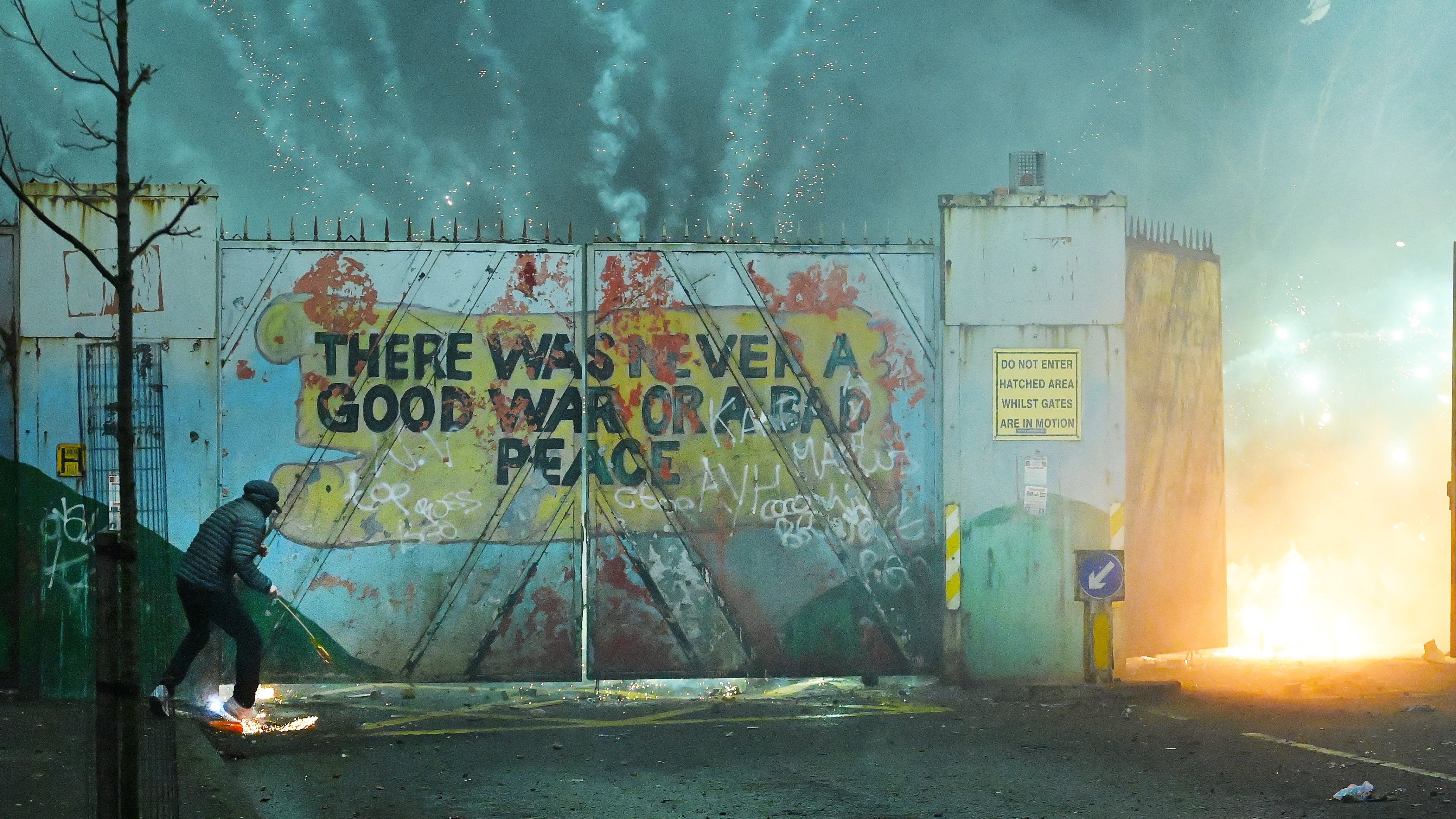
One of Belfast's most visible reminders of the Troubles are the peace walls – physical barriers, some up to 25 feet high, separating Republican/Catholic and Loyalist/Protestant neighborhoods. These walls were erected during the height of the conflict to prevent violence between adjacent communities.
Today, over 20 years after the Good Friday Agreement, many peace walls still stand. Some are decorated with murals, others are plain metal or brick barriers. Gates in the walls open during the day and close at night in some areas. For visitors, they're sobering reminders of division. For residents living nearby, they're complex – some feel safer with them, others see them as barriers to reconciliation.
The peace walls present a paradox: they're called "peace" walls because they prevent violence, yet their existence represents ongoing division. The Northern Ireland government committed to removing them by 2023, but that target passed with most walls still standing. Communities living beside them have mixed feelings about their removal – some want them gone as symbols of division, others fear renewed tensions without them.
The Political Murals
Belfast's political murals are the city's outdoor art gallery – powerful, provocative, and ever-changing expressions of community identity, political beliefs, and historical memory. Both Republican and Loyalist communities have extensive mural traditions.
Republican Murals
Republican murals (primarily in the Falls Road area and other Catholic neighborhoods) often depict:
- Irish historical figures and martyrs
- IRA members killed during the conflict
- International solidarity movements (Palestine, Basque Country, etc.)
- Irish language and cultural imagery
- Commemorations of specific events like Bloody Sunday
Loyalist Murals
Loyalist murals (primarily on the Shankill Road and other Protestant neighborhoods) often feature:
- Ulster Volunteer Force and other Loyalist paramilitary imagery
- British military figures and regiments
- King William III and historical Protestant iconography
- "No Surrender" and similar defiant messaging
- Commemorations of Loyalist casualties
These murals aren't just decoration – they're political statements, community markers, and ways of claiming space. They evolve over time, with new murals painted and old ones refreshed or replaced. Some have become less militaristic, focusing instead on cultural identity, peace, or community pride. Others remain deliberately provocative.
For guides like me, explaining the murals means providing context without judgment. These aren't "sides" with one being right and one wrong – they're communities with different historical narratives, different traumas, and different aspirations. Understanding both perspectives is essential to understanding Belfast.
The Good Friday Agreement
April 10, 1998 – Good Friday – marked a turning point. After years of negotiations, representatives from nationalist and unionist parties, along with the British and Irish governments, signed the Good Friday Agreement (also called the Belfast Agreement). This complex political settlement established:
- A devolved Northern Ireland Assembly with power-sharing between nationalists and unionists
- Recognition that Northern Ireland's constitutional status could change only through majority consent
- Reforms to policing, justice, and civil rights
- Prisoner releases and paramilitary decommissioning processes
- Cross-border cooperation between Northern Ireland and the Republic of Ireland
The Agreement didn't solve everything overnight. Implementation has been rocky, with the Assembly suspended multiple times. Disagreements continue about flags, parades, dealing with the past, and numerous other issues. But the Agreement created a framework for political resolution instead of violence.
Most importantly, it largely worked. Deaths from political violence dropped dramatically. Paramilitary ceasefires generally held. Investment poured into Belfast. Young people grew up without experiencing what my generation considered normal. The Agreement wasn't perfect, but it was profoundly important.
Belfast's Transformation
Post-1998 Belfast has undergone remarkable transformation. The city center, once devastated by bombings, is now a vibrant shopping and entertainment district. The Titanic Quarter has been developed into a waterfront destination. The Cathedral Quarter has become an arts and cultural hub. Investment, tourism, and confidence have returned.
But this transformation is complicated. Some areas remain divided and economically disadvantaged. Peace wall communities haven't experienced the same investment as the city center. Political tensions persist around flags, parades, and legacy issues. Brexit created new uncertainties and tensions.
Visiting Belfast's Political History Sites
For visitors, engaging with Belfast's political history requires sensitivity and openness. Here's how to approach it:
Take a Black Cab tour
Local taxi drivers offer tours of the murals and peace walls, providing firsthand perspectives and community insights. These tours support local people who lived through the Troubles.
Visit Both Communities
Don't just see one side. Republican and Loyalist areas both have stories to tell. Understanding requires hearing multiple perspectives.
Ask Questions
Good guides welcome respectful questions. We'd rather explain than have visitors leave confused or with one-sided understandings.
Recognize Complexity
There are no simple heroes and villains in this history. Communities on both sides suffered. Understanding means acknowledging that complexity.
Respect Sensitivity
This history is recent. People lost family members, were injured, carry trauma. Treat sites respectfully, don't trivialize, and remember these are real communities, not tourist attractions.
The Importance of This History
Why should visitors care about Belfast's political history? Because it's fundamental to understanding the city, its people, and its ongoing journey toward reconciliation. Belfast's transformation from conflict to peace offers lessons about resilience, compromise, and the long, difficult work of healing divided communities.
When you walk past the peace walls, when you see the murals, when you hear stories from locals who lived through the Troubles, you're witnessing something profound – a society trying to move forward while honestly acknowledging its past. That's rare and valuable.
Belfast's political history is challenging, complex, and sometimes uncomfortable. But it's also hopeful. This is a city that experienced decades of violence yet chose peace. A city where communities that were literally walled off from each other are slowly, imperfectly, learning to share space. A city that doesn't hide its scars but instead uses them to teach, to remember, and to prevent repetition.
Understanding this history transforms Belfast from a place you visit to a place you connect with – a city whose present makes sense only when you understand its past, and whose future depends on continued commitment to peace, dialogue, and shared space. That's why I guide visitors through these stories. Not to dwell on violence, but to celebrate resilience and to show that change, however difficult, is always possible.
Experience This With Us
Join us for an unforgettable journey through Northern Ireland's most stunning locations with expert local guidance.